October 22, 2026
The Parts of Working Through COVID-19 That Have Stayed With Me
By Nivia Fontanez
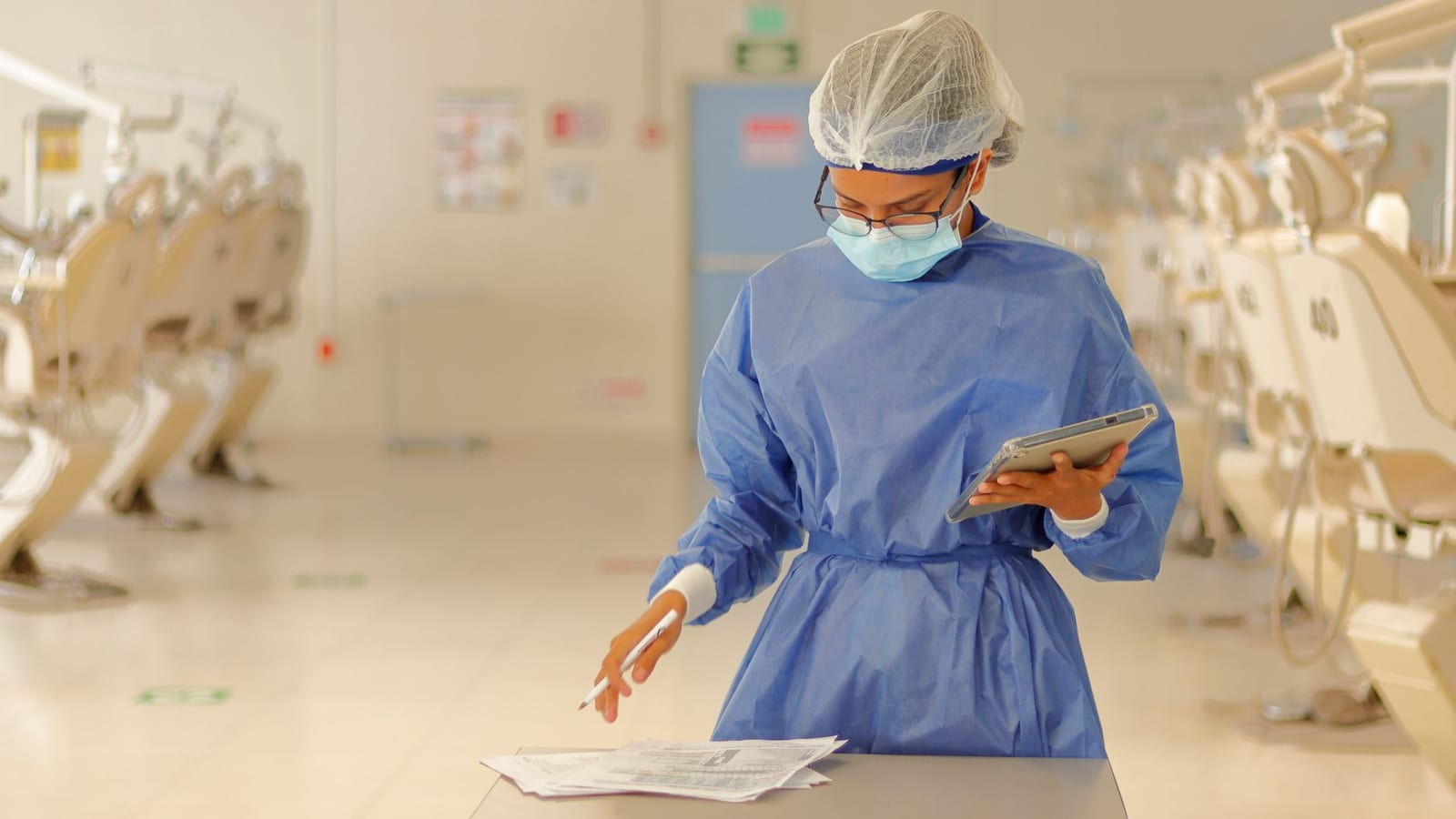
Some periods in your life stand out from everything else. You might not remember every conversation or every day, but you remember how things felt and how you approached situations that once seemed ordinary. For me, working in healthcare during the height of COVID-19 was one of those periods.
As a radiology technologist, I work in a field where attention to detail, established procedures, and patient care are part of the job. I was accustomed to working in a medical environment, following safety protocols, and understanding that patients could arrive with very different needs. Still, the pandemic introduced a level of uncertainty that was difficult to prepare for.
When I think about that time now, I don't necessarily think about one dramatic event. I think about how the healthcare atmosphere changed, how ordinary interactions became more complicated, and how I began to understand certain parts of my profession differently.
Some of those observations have stayed with me long after the pandemic's most difficult period passed.
Getting Used to Not Having All the Answers
One thing I remember about the pandemic was how quickly information could change. Healthcare professionals are trained to work within established procedures, but COVID-19 created circumstances in which guidance and expectations were constantly evolving.
There is a difference between understanding that medicine evolves and experiencing that evolution while you're trying to do your job.
In radiology, I am accustomed to paying attention to details and following the appropriate protocols for each examination. During the pandemic, an additional layer of awareness emerged around infection prevention, workplace safety, and the possibility of exposure.
I found myself thinking more carefully about things that previously required less conscious attention. What had changed since the last shift? Were there new instructions to follow? Was I approaching something out of habit when I should have been paying closer attention?
I don't think uncertainty automatically makes someone better at their job. Sometimes it makes the work more tiring because you spend additional energy thinking through decisions that would normally feel straightforward.
What I took from that experience was the importance of being willing to reconsider what you think you know. Experience matters in healthcare, but experience should never make you unwilling to learn or adjust.
The Emotional Weight Wasn't Always Obvious
When people talk about healthcare workers during COVID-19, the conversation often focuses on the most visible parts of the crisis. Those experiences deserve attention, but I also think about the less obvious ways that period affected the working day.
Ordinary interactions carried a different level of concern. Patients were worried about their health, but many were also concerned about being in a medical facility in the first place. Healthcare workers had their own concerns, including the possibility of bringing an infection home to people they cared about.
You could be concentrating on your responsibilities while also carrying those thoughts in the back of your mind.
I think people sometimes overlook that about working in healthcare. You don't necessarily get to put every personal concern aside simply because your shift has started. You still have to perform your duties carefully, even when the circumstances around you are unsettling.
That doesn't mean every day felt overwhelming. Some days were more manageable than others, and there were still ordinary moments during the workday. But it was hard to ignore what was happening outside the immediate task.
Looking back, I think I became more aware of how much mental energy it takes to maintain your usual professional standards when the environment around you is anything but usual.
How Much Healthcare Depends on Other People
Medical imaging can look like a very equipment-focused profession from the outside. Patients see the X-ray machine or CT scanner, and it's understandable that they associate the work primarily with technology.
But healthcare depends on people coordinating their responsibilities, often without much recognition for how that coordination happens.
During the pandemic, I became more aware that no department operates completely on its own. Radiology technologists, nurses, physicians, environmental services staff, transport teams, and many others help keep a healthcare facility functioning.
When circumstances become more complicated, those relationships become harder to overlook.
I also think there is a difference between appreciating teamwork in theory and recognizing how much your own work depends on someone else's.
It is easy to focus on the responsibilities directly in front of you. You have examinations to complete, procedures to follow, and patients who need your attention. But someone else may be handling a completely different set of challenges that affect whether you can do your job efficiently.
The pandemic reinforced my respect for the many people whose work supports patient care, including those who rarely receive public attention.
Not Every Lesson Needs to Be Inspirational
One thing I've become less interested in is the idea that every difficult experience must have a positive lesson attached.
COVID-19 was a frightening and painful period for many people. Healthcare workers faced pressures that shouldn't be romanticized simply because they kept showing up for work.
I can recognize that the experience changed my perspective without pretending that those changes made the circumstances worthwhile.
I learned practical things about handling uncertainty, paying attention to changing procedures, and recognizing the importance of colleagues. But I also think it's reasonable to acknowledge that some experiences are simply difficult.
When I reflect on that period, I don't feel the need to turn it into a story about becoming stronger. I would rather be specific about what I remember and what I think differently about now.
For example, I appreciate a predictable workday more. That might sound like a small thing, but predictability matters when you're responsible for doing work carefully. Knowing what to expect allows you to focus more fully on the patient and the examination in front of you.
I also appreciate that healthcare professionals can be committed to their work while still needing rest, boundaries, and time away.
Those ideas are not particularly dramatic, but they feel more useful to me than trying to find one grand lesson in everything that happened.
What I Carry Into My Work Today
Today, my work in radiology includes X-rays, CT imaging, and bone density examinations. Each area has its own responsibilities, but all of them require consistency and attention.
I don't approach every examination thinking about COVID-19. Most of the time, I concentrate on the work directly in front of me, as I should.
Still, that period changed how I think about familiar routines.
I understand more clearly that circumstances can change quickly, even in a profession built around established procedures. I have greater respect for the people working alongside me, and I appreciate the value of a workplace where colleagues can depend on one another.
I also try to remember that the things healthcare workers consider ordinary may be anything but ordinary to the people receiving care.
Perhaps the biggest difference is that I no longer take stability quite as much for granted. Before the pandemic, it was easier to assume that tomorrow's workday would look reasonably similar to today's. COVID-19 challenged that assumption for everyone working in healthcare.
I hope we never experience another period quite like it. At the same time, I don't want to forget what it revealed about the profession I work in.
For me, remembering that time isn't about constantly looking backward. It's about bringing a little more awareness into the work I do now, especially on days when everything feels routine.